



Create High-Converting Landing Pages
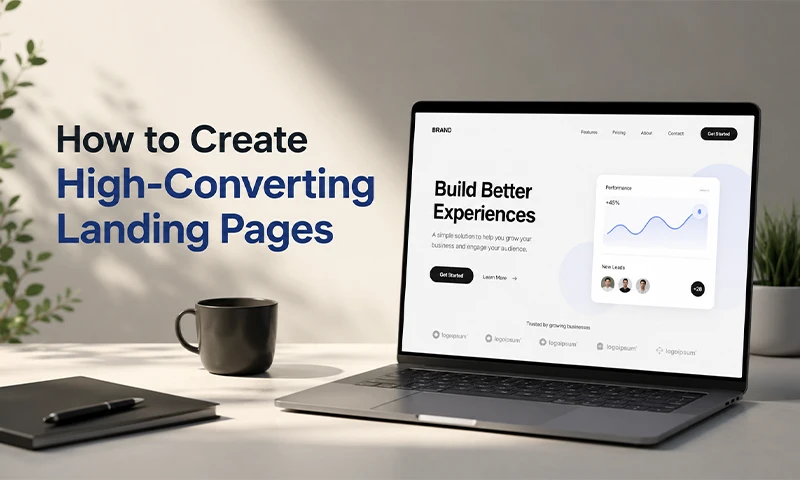
A high-converting landing page is one of the most powerful tools in digital marketing. Whether you’re promoting a product, collecting leads, or encouraging users to sign up for a service, your landing page has one job—to persuade visitors to take action. Unlike a homepage, a landing page is designed with a single goal in mind, eliminating distractions and guiding users toward a specific conversion. Businesses that invest in optimized landing pages often see higher engagement, better lead generation, and increased sales. Understanding the principles behind an effective landing page can significantly improve your marketing results.
Understand Your Target Audience
Before designing your landing page, you must know who your audience is and what they need. Research your target customers, identify their pain points, and understand their goals. Tailoring your messaging to address these needs creates a stronger connection with visitors. Use language that resonates with your audience and clearly explain how your product or service solves their problems. The better you understand your audience, the easier it becomes to create content that encourages action.
Write a Powerful and Clear Headline
Your headline is the first thing visitors notice, making it one of the most critical elements of your landing page. A compelling headline should immediately communicate your unique value proposition and grab attention within seconds. Keep it concise, benefit-focused, and relevant to the visitor’s intent. Pair the headline with a supporting subheadline that provides additional context and reinforces the main message. An effective headline encourages visitors to keep reading instead of leaving the page.
Focus on a Single Call-to-Action
Every successful landing page has one clear objective. Whether it’s downloading an eBook, scheduling a consultation, or purchasing a product, your page should focus on a single call-to-action (CTA). Avoid offering multiple options that may confuse visitors. Use action-oriented CTA buttons with phrases like “Get Started,” “Download Now,” or “Claim Your Free Trial.” Position the CTA prominently and repeat it strategically throughout the page to maximize conversions.
Use Persuasive and Benefit-Driven Content
Instead of simply listing product features, explain the benefits users will receive. Visitors want to know how your solution improves their lives or solves their problems. Use concise paragraphs, bullet points, and bold text to highlight key advantages. Keep the content conversational and easy to scan. Strong copywriting builds trust, addresses objections, and motivates visitors to take the next step.
Include High-Quality Visuals
Visual elements play a crucial role in capturing attention and improving user experience. Use professional images, product screenshots, videos, or illustrations that support your message. Ensure visuals are relevant and reinforce the value of your offer rather than distracting users. Videos demonstrating your product or customer testimonials can significantly increase engagement and conversion rates by providing additional credibility.
Build Trust with Social Proof
People are more likely to take action when they see others have had positive experiences. Include customer testimonials, case studies, star ratings, client logos, or user reviews to establish credibility. Display trust badges, security certifications, and money-back guarantees where appropriate. Social proof reduces uncertainty and reassures visitors that they are making the right decision.
Optimize for Mobile Devices and Speed
With a large percentage of internet traffic coming from smartphones, your landing page must provide an excellent mobile experience. Ensure your page uses a responsive design, readable fonts, and fast-loading images. Slow-loading pages increase bounce rates and reduce conversions. Compress images, minimize unnecessary scripts, and optimize your website’s performance to keep visitors engaged across all devices.
Reduce Distractions and Simplify the Design
A clean and focused design keeps visitors moving toward your conversion goal. Remove unnecessary navigation menus, excessive links, and unrelated content that could lead users away from your CTA. Use plenty of white space, consistent colors, and a logical content flow. Simple layouts improve readability and make it easier for users to understand your offer quickly.
Test, Measure, and Improve Performance
Creating a successful landing page doesn’t end after publishing. Continuously monitor performance using analytics tools to measure metrics such as conversion rate, bounce rate, average session duration, and CTA click-through rate. Conduct A/B testing by experimenting with different headlines, images, CTA buttons, colors, and page layouts. Small improvements based on real user behavior can significantly increase your conversion rates over time.
Conclusion
Creating high-converting landing pages requires a combination of compelling copywriting, attractive design, user-focused messaging, and continuous optimization. By understanding your audience, crafting persuasive headlines, highlighting benefits, building trust through social proof, and maintaining a clear call-to-action, you can turn more visitors into loyal customers. Regular testing and performance analysis ensure your landing page continues to improve and deliver better results. With the right strategy and attention to detail, your landing page can become one of the most valuable assets in your digital marketing efforts.