




Manage Business Growth
Business growth is an exciting sign that a company is moving in the right direction. More customers, higher sales, new employees, and expanding operations can create valuable opportunities for long-term success. However, rapid growth also brings new challenges. When a business tries to handle more customers and larger workloads without improving its systems, quality can quickly decline. Customers may receive inconsistent service, employees may feel overwhelmed, and the brand reputation can suffer. The key is to grow strategically while keeping quality at the center of every decision.
Set Clear Quality Standards
Before expanding, a business should clearly define what quality means for its products or services. These standards should cover customer service, product performance, communication, delivery times, and other important areas. When expectations are clearly documented, employees understand what they need to achieve. Consistent quality standards also make it easier for managers to identify problems before they become serious.
Build Strong Business Processes
Growth becomes difficult when everyday operations depend too heavily on individual employees. Businesses should create simple and repeatable processes for important tasks. Documenting workflows, establishing approval systems, and using checklists can reduce mistakes and improve consistency. Well-designed processes allow new employees to understand their responsibilities faster and help existing teams manage larger workloads more efficiently.
Hire People Carefully
Expanding a business often requires a larger team, but hiring quickly should not mean hiring carelessly. Businesses should look for employees who have the right skills, attitude, and understanding of the company’s values. A strong hiring process can prevent future quality problems. It is also important to provide proper training so new employees understand both their roles and the standards expected from them.
Invest in Employee Training
Even experienced employees need support when a company grows. New products, customers, technologies, and responsibilities can change the way teams work. Regular employee training helps staff improve their skills and stay confident as responsibilities increase. Training should not only focus on technical abilities but also include communication, problem-solving, customer service, and company standards.
Use Technology Wisely
Technology can make business growth much easier when used correctly. Customer relationship management systems, project management platforms, accounting software, automation tools, and analytics can reduce repetitive work and improve accuracy. However, technology should support employees rather than create unnecessary complexity. Businesses should choose tools that solve real problems and make everyday operations simpler.
Monitor Customer Feedback
Customers are one of the best sources of information about whether quality is being maintained. Businesses should regularly collect feedback through reviews, surveys, support conversations, and direct communication. Complaints should not simply be treated as negative comments. They can reveal weaknesses in products, services, or internal processes. Listening carefully to customers allows businesses to make improvements before small issues become major problems.
Avoid Growing Too Quickly
Fast growth may look attractive, but uncontrolled expansion can create unnecessary pressure. Taking on more customers than the business can comfortably serve may result in delayed deliveries, poor communication, and inconsistent service. Companies should make sure their staff, systems, finances, and infrastructure can support expansion before entering a new market or accepting significantly more business.
Maintain Strong Communication
As a company becomes larger, communication can become more complicated. Information may get lost between departments, managers, and employees. Regular meetings, clear responsibilities, shared project systems, and open communication channels can help teams stay aligned. Good internal communication ensures that everyone understands priorities and can respond quickly when problems arise.
Measure Both Growth and Quality
Revenue and customer numbers are important growth indicators, but they should not be the only measurements. Businesses should also track customer satisfaction, product returns, complaints, delivery performance, employee turnover, and error rates. Looking at both growth and quality metrics gives management a more realistic picture of business performance.
Conclusion
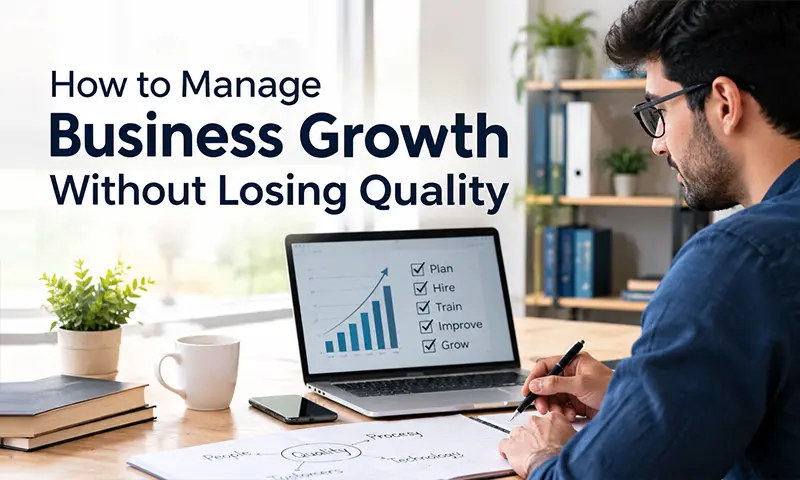
Managing business growth without losing quality requires balance, planning, and continuous improvement. Businesses should strengthen their processes, hire and train the right people, use technology effectively, listen to customers, and monitor quality alongside financial growth. Sustainable growth is not simply about becoming bigger; it is about becoming stronger while continuing to deliver the experience customers expect. When quality remains a priority, growth can become a long-term advantage rather than a source of operational problems.