



Trends in Artificial Intelligence for Businesses
AI Is Becoming a Business Essential
Artificial Intelligence (AI) is rapidly changing how businesses operate, compete, and serve their customers. What once seemed like advanced technology is now becoming part of everyday business operations. From automating repetitive tasks to analyzing large amounts of data, AI is helping companies work faster and make smarter decisions. In 2026, businesses of all sizes are exploring practical ways to use AI to improve productivity, reduce costs, and create better customer experiences.
Generative AI Is Transforming Business Workflows
Generative AI is one of the biggest trends shaping modern businesses. Companies are using AI tools to create marketing content, write reports, generate ideas, summarize documents, and support internal communication. Instead of replacing every human task, generative AI is increasingly being used as a productivity assistant. Employees can complete routine work more quickly while spending more time on creative thinking, strategy, and decision-making.
AI-Powered Customer Service Is Growing
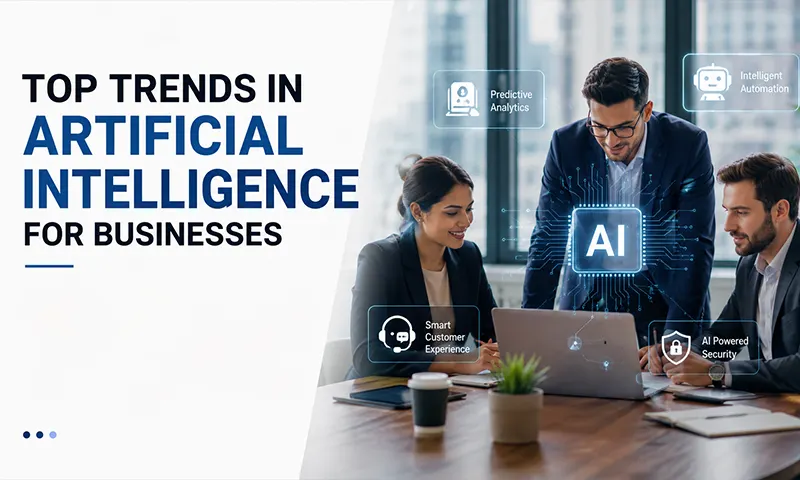
Customer expectations are changing, and businesses need to provide quick and helpful support. AI-powered chatbots and virtual assistants can answer common questions, provide product information, and guide customers through basic processes at any time. More advanced systems can understand context and personalize conversations. This allows businesses to improve response times while reducing the workload on customer service teams.
Predictive Analytics Supports Better Decisions
Businesses generate huge amounts of information every day, but data is only valuable when it can support better decisions. AI-powered predictive analytics can identify patterns and estimate future trends based on available data. Companies can use these insights to forecast demand, understand customer behavior, manage inventory, and identify potential business opportunities. This makes decision-making more data-driven and responsive.
AI Is Improving Marketing and Personalization
Marketing is another area experiencing major AI-driven changes. Businesses can use AI to analyze customer preferences, purchasing behavior, and engagement patterns. These insights help marketers create more personalized campaigns and deliver relevant content to different audiences. AI can also assist with audience segmentation, campaign optimization, and content creation, helping marketing teams improve efficiency without losing their creative direction.
Intelligent Automation Is Reducing Repetitive Work
AI-driven automation is helping employees spend less time on repetitive administrative tasks. Businesses can automate activities such as data entry, document processing, scheduling, invoice handling, and basic reporting. The goal is not simply to reduce human involvement but to allow employees to focus on tasks that require judgment, creativity, communication, and problem-solving.
AI Is Changing Cybersecurity
As businesses become more digitally connected, cybersecurity is becoming increasingly important. AI can help security teams detect unusual behavior, identify potential threats, and respond to suspicious activity more quickly. Machine learning systems can analyze large volumes of security data and recognize patterns that may be difficult to identify manually. This is making AI an increasingly valuable component of modern business security strategies.
AI-Powered Business Intelligence Is Expanding
Traditional business intelligence often requires employees to manually analyze dashboards and reports. New AI-powered business intelligence tools are making data analysis more accessible. Users can increasingly interact with business data using natural language and receive summaries, trends, and insights without needing advanced technical skills. This can help managers make faster decisions based on real-time business information.
AI Is Supporting Smarter Recruitment
Human resources departments are also exploring AI for recruitment and workforce management. AI tools can help organize applications, identify relevant skills, schedule interviews, and analyze workforce trends. However, human oversight remains essential because hiring decisions involve personal circumstances, experience, culture, and judgment. Responsible businesses should use AI to support recruiters rather than blindly automate important employment decisions.
AI Agents Are Emerging in Business Operations
One of the most interesting developments is the rise of AI agents. Unlike traditional AI tools that respond to individual prompts, AI agents can potentially handle multi-step tasks by planning actions, using connected tools, and completing workflows with limited supervision. Businesses are exploring agent-based systems for research, customer support, sales operations, software development, and administrative processes.
Responsible AI Is Becoming More Important
As AI adoption increases, businesses must also pay attention to privacy, security, transparency, accuracy, and responsible AI use. Organizations need clear policies for how employees use AI and how sensitive business or customer information is handled. Human review is particularly important when AI influences decisions involving customers, employees, finances, or other high-impact areas.
The Future of AI in Business
The future of business AI will likely focus less on experimentation and more on practical results. Companies will increasingly evaluate AI based on measurable improvements in productivity, customer satisfaction, operational efficiency, and revenue. Businesses that combine powerful AI technologies with skilled employees, strong data practices, and responsible implementation will be better positioned to benefit from the technology.
Conclusion
Artificial Intelligence is becoming a powerful business advantage, influencing everything from customer service and marketing to cybersecurity, analytics, automation, and decision-making. The most successful businesses will not simply adopt AI because it is popular; they will identify specific problems where the technology can deliver meaningful value. As AI continues to evolve, combining human creativity and judgment with intelligent technology can create more efficient, innovative, and competitive businesses.