



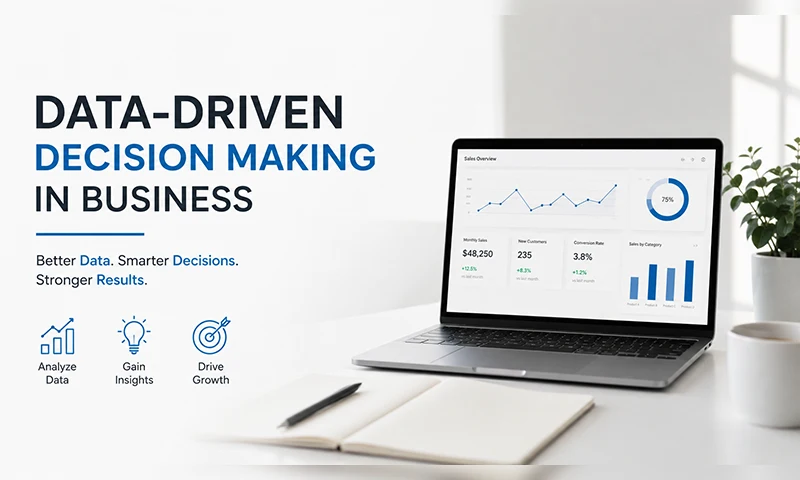
Data-Driven Decision Making
Introduction to Data-Driven Decision Making
In today’s competitive business environment, making decisions based on assumptions is no longer enough. Data-driven decision making (DDDM) enables businesses to use facts, statistics, and insights to guide their strategies. By analyzing reliable data, organizations can reduce risks, improve efficiency, and make informed choices that support long-term growth. Whether you run a startup or a large enterprise, using data effectively can give you a significant competitive advantage.
What Is Data-Driven Decision Making?
Data-driven decision making is the process of collecting, analyzing, and interpreting data before making business decisions. Instead of relying on intuition alone, companies use customer behavior, market trends, financial reports, and operational metrics to determine the best course of action. This approach helps businesses understand what is working, identify opportunities, and address challenges with confidence.
Benefits of Using Data in Business
One of the biggest advantages of data-driven decision making is improved accuracy. Businesses can identify patterns that would otherwise go unnoticed, allowing them to make smarter investments and strategic decisions. It also increases productivity by helping teams prioritize tasks based on measurable outcomes. Additionally, data enhances customer satisfaction by revealing consumer preferences, enabling businesses to deliver more personalized products and services.
Collect High-Quality Business Data
The foundation of effective decision making is accurate data. Businesses should gather information from multiple reliable sources, including website analytics, customer feedback, sales reports, social media insights, and CRM systems. Maintaining clean and organized data is equally important because inaccurate or outdated information can lead to poor business decisions.
Analyze Data to Discover Valuable Insights
Collecting data is only the first step. Businesses must analyze it to uncover trends and actionable insights. Using tools such as dashboards, spreadsheets, and business intelligence software helps transform raw information into meaningful reports. Regular analysis allows managers to monitor performance, predict future trends, and make proactive decisions rather than reactive ones.
Use Data to Improve Customer Experience
Understanding customer behavior is one of the most valuable applications of business data. Companies can analyze purchasing habits, website activity, and customer feedback to identify what their audience truly wants. These insights help businesses create personalized marketing campaigns, improve products, and deliver better customer support, ultimately increasing loyalty and retention.
Monitor Performance with Key Metrics
Tracking Key Performance Indicators (KPIs) is essential for measuring business success. Metrics such as revenue growth, customer acquisition cost, conversion rates, employee productivity, and customer retention provide a clear picture of business performance. Reviewing these indicators regularly ensures that decisions remain aligned with organizational goals and market demands.
Create a Data-Driven Company Culture
Successful organizations encourage employees at every level to use data when making decisions. Providing training, promoting transparency, and giving teams access to relevant analytics tools help foster a culture where decisions are backed by evidence instead of assumptions. When everyone values data, collaboration and innovation naturally improve.
Common Challenges and How to Overcome Them
Many businesses struggle with poor data quality, limited technical expertise, or resistance to change. These challenges can be addressed by investing in reliable data management systems, training employees, and establishing clear processes for collecting and analyzing information. Starting with small, measurable projects also helps teams gain confidence in data-driven strategies.
Conclusion
Data-driven decision making is no longer an option—it’s a necessity for businesses that want to grow and remain competitive. By collecting accurate data, analyzing meaningful insights, monitoring key performance metrics, and building a data-focused culture, organizations can make smarter decisions with greater confidence. Businesses that embrace data today will be better prepared to adapt to changing markets, improve customer satisfaction, and achieve sustainable long-term success.