





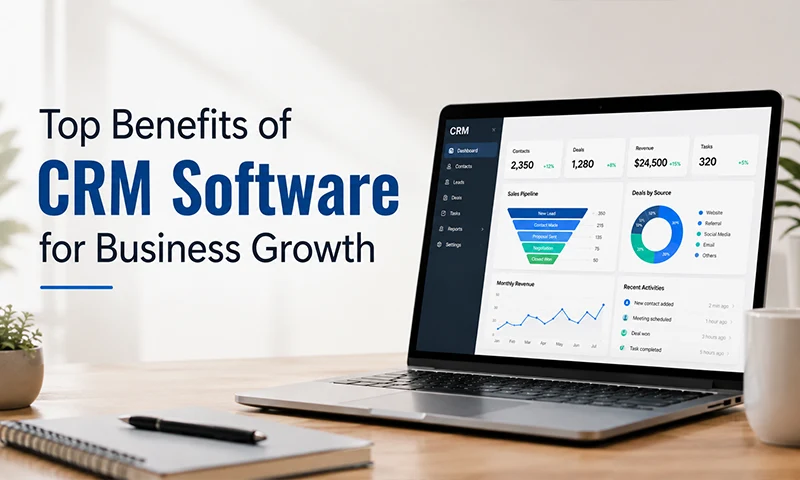
CRM Software for Business Growth
What Is CRM Software?
CRM software (Customer Relationship Management software) is a digital solution that helps businesses manage customer information, sales activities, communication, and relationships in one organized place. Instead of keeping customer details across spreadsheets, emails, and separate applications, companies can use CRM software to create a centralized system that makes important information easier to access and manage.
Better Customer Relationship Management
One of the biggest benefits of CRM software is improved customer relationship management. Businesses can maintain detailed customer profiles containing contact information, previous interactions, preferences, purchases, and communication history. This allows sales and support teams to understand customers better and provide more personalized experiences.
Improved Sales Management
CRM platforms can make the sales process more organized and efficient. Sales teams can track leads, monitor opportunities, schedule follow-ups, and manage different stages of the sales pipeline. With a clear overview of potential customers, sales representatives can focus their attention on the opportunities that are most likely to convert.
Higher Employee Productivity
Manual administrative work can consume a significant amount of time. CRM software automates repetitive tasks such as reminders, data organization, follow-up notifications, and certain customer communications. By reducing these routine responsibilities, employees can spend more time on meaningful activities such as selling, building relationships, and solving customer problems.
More Effective Lead Management
Managing leads effectively is essential for business growth. CRM software helps companies capture and organize leads from different sources while allowing teams to track their progress. Businesses can identify which prospects are interested, which require additional communication, and which are ready for conversion. This structured approach can reduce the chances of valuable leads being forgotten.
Personalized Customer Experiences
Modern customers expect businesses to understand their needs. A CRM system provides teams with useful customer information that can support personalized communication. Sales and marketing teams can use customer history and preferences to create more relevant offers, messages, and follow-ups, helping businesses build stronger long-term relationships.
Better Team Collaboration
A CRM platform creates a shared environment where authorized employees can access updated customer information. This improves team collaboration because sales, marketing, customer service, and management teams can work with the same information. Better collaboration also reduces confusion caused by duplicate or outdated customer records.
Data-Driven Business Decisions
Business growth depends on making informed decisions. CRM systems can provide reports and analytics related to sales performance, customer activity, lead conversion, and revenue trends. These insights help managers understand what is working and where improvements may be needed. Data-driven decision-making can make business strategies more focused and measurable.
Increased Customer Retention
Attracting new customers is important, but retaining existing customers can be equally valuable. CRM software helps businesses maintain consistent communication and identify customer needs or potential issues. By delivering timely support and personalized engagement, companies can strengthen customer loyalty and encourage repeat business.
Marketing Efficiency
CRM software can also support marketing activities by helping teams organize customer segments and track campaign performance. Businesses can use customer data to target specific groups with more relevant content and offers. This can improve marketing efficiency while reducing unnecessary communication with people who are unlikely to be interested.
Business Growth and Scalability
As a company grows, managing customers manually becomes increasingly difficult. CRM software provides a structured system that can grow alongside the organization. New employees, customers, leads, and sales opportunities can be managed without relying entirely on complicated spreadsheets. This makes CRM technology particularly useful for growing businesses.
Conclusion
The benefits of CRM software for business growth extend far beyond simply storing customer information. From improving sales management and employee productivity to strengthening customer relationships and supporting data-driven decisions, CRM software can become an important part of a modern business strategy. By organizing customer data, automating routine tasks, and giving teams better visibility into their operations, a CRM system can help businesses work smarter, serve customers better, and build a stronger foundation for sustainable growth.