


AI Is Changing Employee Recruitment
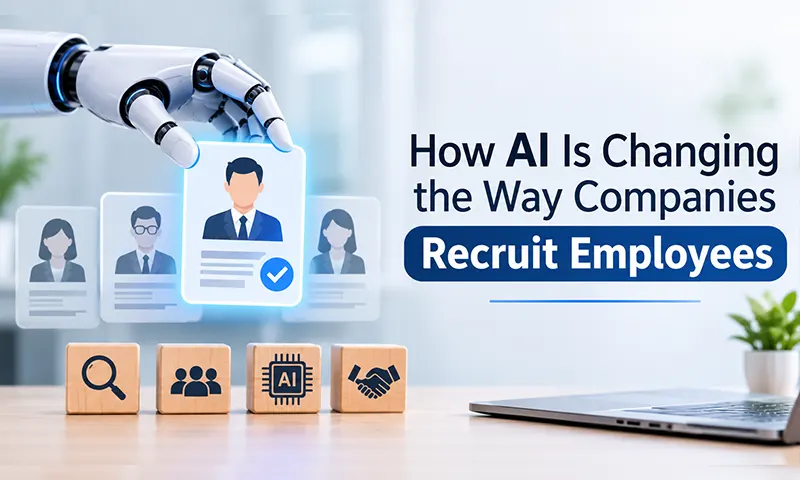
Artificial Intelligence (AI) is changing the way businesses operate, and recruitment is one area experiencing significant transformation. Finding the right employees has always been an important but time-consuming task for companies. From reviewing hundreds of resumes to conducting interviews and selecting suitable candidates, the traditional hiring process requires considerable effort. Today, AI-powered recruitment tools are helping businesses make this process faster, more organised, and efficient.
As companies compete to attract skilled professionals, AI is becoming an increasingly valuable part of modern hiring strategies.
1. Faster Resume Screening
One of the biggest challenges recruiters face is reviewing a large number of job applications. For popular positions, companies may receive hundreds or even thousands of resumes. Going through each application manually can take several days.
AI-powered recruitment software can analyse resumes within minutes. It identifies relevant skills, qualifications, work experience, and keywords that match the job description. This helps recruiters shortlist suitable candidates more quickly and spend less time on repetitive administrative tasks.
2. Better Candidate Matching
Hiring the right person is not just about finding someone with the correct educational background. Companies also need employees whose skills and experience match the responsibilities of the role.
AI tools can compare candidate profiles with job requirements and identify potential matches. Some advanced platforms can also analyse previous hiring patterns to help recruiters understand which candidate profiles may be suitable for particular positions.
This makes it easier for businesses to identify qualified applicants and improve their overall recruitment process.
3. Improved Candidate Experience
The recruitment experience plays an important role in how candidates view a company. Delayed responses, unclear communication, and complicated application procedures can discourage talented professionals from continuing with the hiring process.
AI-powered chatbots can answer common questions, provide application updates, explain job requirements, and help candidates schedule interviews. These tools are available around the clock, allowing applicants to receive basic information without waiting for a recruiter to respond.
As a result, candidates can enjoy a smoother and more convenient hiring experience.
4. More Efficient Interview Scheduling
Arranging interviews can become complicated when recruiters, hiring managers, and candidates have different schedules. AI-based scheduling tools help simplify this process by identifying available time slots and coordinating meetings.
Some platforms also support online interviews and automated communication. This reduces unnecessary back-and-forth emails and allows recruitment teams to focus on evaluating candidates rather than managing schedules.
5. Reducing Recruitment Costs
Recruitment involves several expenses, including advertising job vacancies, reviewing applications, conducting interviews, and onboarding new employees.
By automating repetitive tasks, AI can help companies reduce the time and resources spent on hiring. Smaller businesses and startups can particularly benefit from these tools because they often have limited recruitment teams and budgets.
However, companies should carefully evaluate software costs and choose solutions that provide genuine value.
6. Challenges and Limitations of AI Recruitment
Despite its advantages, AI recruitment also comes with certain challenges. One major concern is algorithmic bias. If an AI system is trained using biased historical hiring data, it may unfairly favour certain candidates while overlooking others.
There are also concerns about candidate privacy, data security, and the lack of human interaction during recruitment.
For these reasons, companies should regularly review their AI systems, protect applicant information, and ensure that important hiring decisions involve human judgment.
7. The Future of Recruitment
AI is expected to become an even more important part of recruitment in the coming years. From identifying skill gaps to predicting future workforce requirements, intelligent hiring tools will continue to offer new opportunities for businesses.
However, technology should support recruiters rather than completely replace them. Human understanding, communication, creativity, and professional judgment remain essential when evaluating people.
Conclusion
AI is transforming the way companies recruit employees by making hiring faster, more efficient, and more organised. It helps businesses screen applications, identify suitable candidates, improve communication, and reduce administrative work. However, successful recruitment still requires a balance between technology and human involvement. Companies that use AI responsibly while keeping people at the centre of their hiring decisions will be better prepared to attract and retain the right talent.