




Rise of Remote Work
Introduction: The Evolution of Work Culture
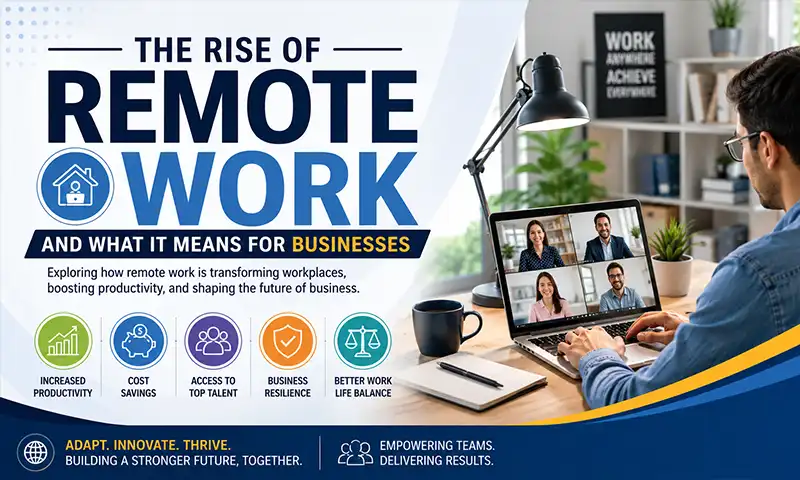
The workplace has undergone a dramatic transformation over the last decade, and one of the most significant changes has been the rapid rise of remote work. What once seemed like a rare perk offered by a few progressive companies has now become a mainstream working model across industries. Businesses worldwide have embraced remote and hybrid work setups, changing how employees collaborate, communicate, and contribute to organizational growth.
The shift toward remote work was accelerated by technological advancements and global events that forced companies to rethink traditional office environments. Today, businesses are increasingly realizing that flexible work arrangements can improve productivity, reduce operational costs, and attract top talent from around the world.
This article explores the rise of remote work and what it means for businesses, including its benefits, challenges, and long-term impact on organizational success.
Understanding Remote Work
Remote work refers to a work arrangement where employees perform their job duties outside of a traditional office setting. Instead of commuting to a physical workplace, individuals use digital tools and communication platforms to complete tasks from home, coworking spaces, or even while traveling.
The widespread availability of high-speed internet, cloud computing, and collaboration software has made remote work more accessible than ever before. Platforms such as video conferencing tools, project management software, and instant messaging applications have enabled seamless communication among distributed teams.
Businesses no longer need to rely solely on physical office spaces to maintain efficiency, making remote work a viable option for companies of all sizes.
Why Remote Work Is Growing Rapidly
Several factors have contributed to the increasing popularity of remote work.
1. Technological Advancements
Modern technology has made remote collaboration easier and more effective. Cloud-based systems allow employees to access documents and work files from anywhere, ensuring uninterrupted workflow.
Tools for video meetings, file sharing, and team collaboration have significantly reduced communication barriers between employees and employers.
2. Employee Demand for Flexibility
Employees increasingly prioritize work-life balance and flexibility when choosing employers. Remote work allows workers to manage personal responsibilities while maintaining productivity.
Businesses that offer flexible work options often experience higher employee satisfaction and retention rates.
3. Cost Savings for Companies
One of the biggest advantages of remote work is the reduction in operational expenses. Businesses can save money on office rent, utilities, office supplies, and commuting allowances.
Smaller office spaces or fully remote operations can significantly improve profit margins.
4. Access to Global Talent
Remote work removes geographical limitations from hiring. Companies can recruit skilled professionals from different cities or countries instead of restricting talent searches to local markets.
This broader hiring pool enables organizations to build stronger and more diverse teams.
Benefits of Remote Work for Businesses
Remote work offers several advantages that directly benefit organizations.
Increased Productivity
Contrary to traditional assumptions, many businesses report increased productivity among remote employees. Working from home often reduces distractions associated with office environments and lengthy commutes.
Employees can focus more on tasks and structure their schedules in ways that suit their peak productivity hours.
Lower Employee Turnover
Providing remote work options improves employee satisfaction and loyalty. Workers who enjoy flexibility are more likely to remain with an organization long term.
Lower turnover rates reduce recruitment and training costs, helping businesses maintain continuity and efficiency.
Improved Employee Well-Being
Remote work allows employees to spend more time with family, pursue hobbies, and maintain healthier lifestyles.
Reduced commuting stress and increased personal time often contribute to improved mental health and job satisfaction.
Business Continuity and Resilience
Remote work strengthens organizational resilience during emergencies or disruptions. Companies with remote systems in place can continue operations despite unforeseen challenges.
This adaptability helps businesses remain competitive and prepared for changing circumstances.
Challenges Businesses Face With Remote Work
Although remote work offers many advantages, it also comes with challenges that organizations must address.
Communication Barriers
Without face-to-face interactions, misunderstandings may arise. Remote teams must rely heavily on digital communication tools, which sometimes lack the clarity of in-person discussions.
Businesses need effective communication strategies to ensure smooth collaboration.
Maintaining Company Culture
Creating a strong workplace culture becomes more challenging when employees work remotely.
Organizations must invest in virtual team-building activities, regular meetings, and employee engagement programs to maintain a sense of belonging.
Cybersecurity Concerns
Remote work increases cybersecurity risks because employees often access company systems from personal devices or unsecured networks.
Businesses must implement strong security measures such as VPNs, encrypted systems, and cybersecurity training programs.
Performance Monitoring
Managers may struggle to measure productivity in remote settings.
Instead of focusing on hours worked, businesses are increasingly shifting toward results-based performance measurement, emphasizing outcomes rather than physical presence.
The Rise of Hybrid Work Models
Many businesses are adopting a hybrid work model, which combines remote work with office attendance.
Hybrid work offers employees flexibility while preserving opportunities for in-person collaboration and team bonding.
This balanced approach can improve productivity while ensuring organizations maintain strong workplace relationships.
Companies are redesigning office spaces to accommodate fewer daily employees, focusing more on collaborative environments rather than traditional desk arrangements.
How Businesses Can Adapt to Remote Work
To succeed in a remote work environment, businesses must implement effective strategies.
Invest in Technology
Reliable collaboration tools, secure cloud systems, and project management software are essential for remote operations.
Set Clear Expectations
Employers should define clear communication guidelines, deadlines, and performance metrics.
Transparency helps employees understand their responsibilities and stay accountable.
Encourage Employee Engagement
Regular virtual meetings, recognition programs, and team-building activities can strengthen employee relationships and morale.
Prioritize Mental Health
Remote work can sometimes lead to isolation or burnout. Businesses should provide wellness programs, mental health resources, and encourage healthy work-life boundaries.
The Future of Remote Work
Remote work is no longer a temporary trend—it is shaping the future of employment.
Many organizations are expected to continue offering flexible work options as employees increasingly prefer adaptable schedules.
Businesses that resist workplace flexibility may struggle to attract and retain top talent in competitive industries.
The future workplace will likely involve a mix of remote, hybrid, and office-based work depending on company goals and employee preferences.
Organizations that embrace digital transformation and prioritize employee flexibility will have a competitive advantage in the evolving business landscape.
Conclusion
The rise of remote work has fundamentally changed how businesses operate, communicate, and grow. From increased productivity and lower operational costs to improved employee well-being and access to global talent, remote work presents significant opportunities for organizations willing to adapt.
However, businesses must also overcome challenges such as communication gaps, cybersecurity concerns, and maintaining workplace culture. By investing in technology, fostering employee engagement, and embracing flexible work models, companies can thrive in this new era of employment.
Ultimately, remote work is redefining the future of business, making flexibility, innovation, and digital collaboration essential for long-term success.