



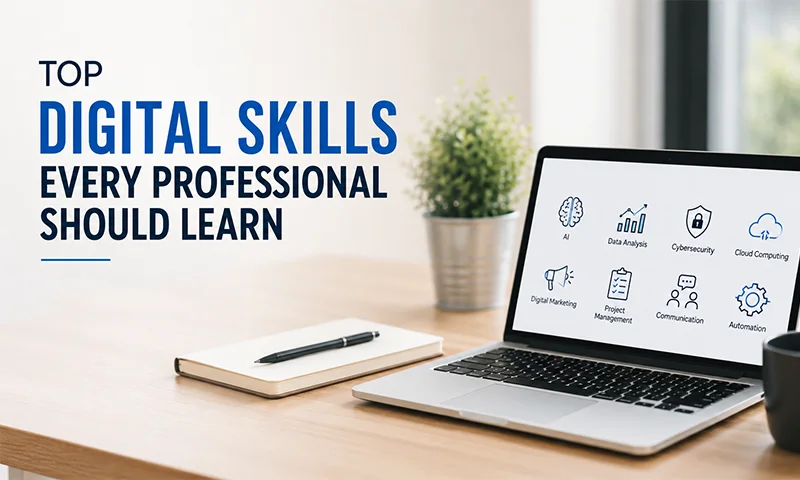
Top Digital Skills Every Professional Should Learn
1. Digital Literacy: The Foundation of Modern Work
Digital literacy is one of the most important skills for professionals today. It involves understanding computers, software, online platforms, digital communication, cloud services, and basic cybersecurity. Strong digital literacy helps employees work efficiently, adapt to new technologies, and solve everyday workplace challenges with confidence.
2. Artificial Intelligence and Generative AI
Artificial intelligence is transforming almost every industry, making AI knowledge increasingly valuable. Professionals should understand how tools such as generative AI can support research, content creation, data analysis, automation, and problem-solving. Learning how to write effective AI prompts and verify AI-generated information can significantly improve productivity.
3. Data Analysis and Data Literacy
Businesses increasingly depend on data to make informed decisions. Professionals should learn how to understand, organize, interpret, and present data. Basic knowledge of spreadsheets, charts, dashboards, and data visualization can help employees identify trends, measure performance, and communicate valuable insights to decision-makers.
4. Cybersecurity Awareness
Cybersecurity is not only the responsibility of IT departments. Every professional should understand common digital threats such as phishing, malware, weak passwords, social engineering, and unsafe downloads. Learning how to use strong passwords, multi-factor authentication, secure networks, and safe browsing practices can protect both personal and business information.
5. Cloud Computing Skills
Cloud platforms have become essential for modern businesses because they allow teams to store, access, and manage information from almost anywhere. Professionals should become familiar with cloud-based tools such as online storage, collaboration platforms, document management systems, and cloud applications. Basic cloud knowledge can improve flexibility and teamwork.
6. Digital Communication and Collaboration
Remote and hybrid workplaces have made digital communication more important than ever. Professionals should know how to communicate effectively through email, video meetings, instant messaging, and project-management platforms. Clear writing, professional online behavior, active listening, and organized communication can strengthen teamwork and prevent misunderstandings.
7. Digital Marketing and Social Media
Understanding digital marketing can benefit professionals in many different roles, not just marketing positions. Basic knowledge of search engine optimization, social media, online advertising, content marketing, and analytics helps professionals understand how organizations attract and engage customers in the digital marketplace.
8. Project Management Tools
Modern projects often involve multiple people, deadlines, documents, and digital workflows. Professionals should know how to use project-management and task-tracking platforms to organize responsibilities and monitor progress. Skills such as prioritization, deadline management, documentation, and digital workflow management can make professional teams more productive.
9. Basic Coding and Automation
Professionals do not necessarily need to become software developers, but basic coding knowledge can be highly useful. Understanding concepts such as logic, automation, scripts, and simple programming can help employees automate repetitive tasks and improve workflows. Even no-code and low-code platforms can provide valuable automation opportunities.
10. Adaptability and Continuous Learning
Technology changes rapidly, so learning one digital tool is not enough. Professionals should develop a mindset of continuous learning and regularly update their digital skills. Following industry developments, taking online courses, experimenting with new tools, and learning from practical projects can help professionals remain competitive in a changing job market.
11. Why Digital Skills Matter for Career Growth
Digital skills can improve productivity, employability, and career opportunities. Professionals who combine technical knowledge with communication, creativity, critical thinking, and problem-solving are often better prepared for changing workplace demands. Building a strong digital skill set is therefore an investment in long-term professional growth.
12. Conclusion: Build Skills for the Digital Future
The modern workplace requires professionals to be comfortable with technology and willing to keep learning. From artificial intelligence and data analysis to cybersecurity, cloud computing, and digital communication, these skills can create significant advantages across industries. By continuously developing digital capabilities, professionals can stay adaptable, productive, and prepared for the opportunities of the future.