



Organize Your Freelance Workflow
Freelancing offers flexibility, independence, and the freedom to choose your projects, but managing everything alone can sometimes feel overwhelming. From communicating with clients and meeting deadlines to handling payments and completing creative work, freelancers have several responsibilities to manage every day. An organized freelance workflow helps you stay productive, reduce unnecessary stress, and deliver high-quality work consistently. With the right systems in place, you can manage your time more effectively, maintain better client relationships, and create more opportunities for professional growth.
1. Set Clear Goals and Priorities
Every productive freelance workflow begins with clear goals. Before starting your workday, identify the tasks you need to complete and decide which ones deserve your attention first. For example, finishing a client project with an approaching deadline may be more important than responding to a non-urgent email. Breaking larger projects into smaller tasks also makes complicated assignments easier to manage. Clear priorities help freelancers stay focused, avoid unnecessary distractions, and make steady progress toward their professional and financial goals.
2. Create a Consistent Daily Schedule
Although freelancing allows you to work flexibly, following a consistent schedule can improve productivity. Decide when you will begin working, take breaks, communicate with clients, and finish your tasks. Try to schedule demanding activities during the hours when you feel most focused and creative. You do not need to follow a rigid timetable every day, but maintaining a basic routine creates structure. A consistent freelance work schedule also helps you separate professional responsibilities from personal time, reducing the risk of burnout.
3. Use Project Management Tools
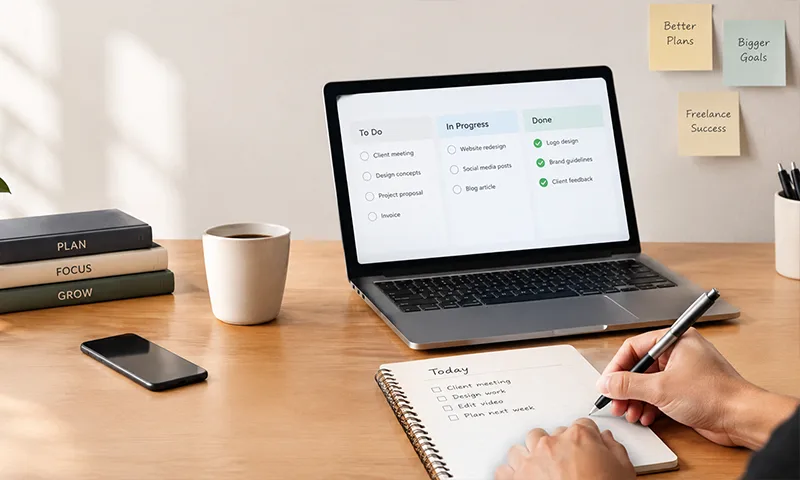
Managing several clients and deadlines through memory alone can quickly become difficult. Project management tools help you organize assignments, track progress, and identify upcoming responsibilities. Platforms such as Trello, Asana, and Notion allow freelancers to create task lists, organize projects, and maintain an overview of their workload. Choose a tool that matches your working style instead of using too many applications simultaneously. An effective freelance project management system should make your work easier, not create another complicated task.
4. Break Projects into Smaller Tasks
Large projects can feel overwhelming when you focus only on the final deadline. Instead, divide each assignment into manageable steps. For example, a graphic design project might include research, brainstorming, initial concepts, revisions, final artwork, and file delivery. Assign a realistic deadline to every stage and monitor your progress as you work. This approach makes it easier to identify potential delays before they become serious problems. Breaking projects into smaller tasks improves accountability and helps you maintain steady progress without rushing at the last minute.
5. Organize Your Files and Digital Workspace
A cluttered digital workspace wastes time and makes important documents harder to find. Create a clear folder structure for each client, including separate folders for briefs, references, working files, feedback, and final deliverables. Use consistent file names that describe the project and version. For example, a file named “Brand_Logo_V02” is easier to identify than “Final_New_Logo_Updated.” Regularly remove unnecessary duplicates and back up important documents. A well-organized workspace supports a faster, smoother freelance workflow and reduces the risk of losing valuable work.
6. Manage Client Communication Efficiently
Clear communication prevents misunderstandings and helps projects move forward smoothly. At the beginning of every assignment, confirm the scope of work, payment terms, deadlines, revision limits, and expected deliverables. Keep important decisions in writing so both parties can refer to them later. You can also establish specific hours for checking emails and messages instead of responding immediately to every notification. Effective client communication protects your time, builds trust, and creates a more professional experience for everyone involved.
7. Track Your Time and Productivity
Understanding how you spend your working hours helps you estimate future projects more accurately. Use a time-tracking tool or a simple spreadsheet to record the time spent on different activities. You may discover that revisions, meetings, or administrative work consume more time than expected. Review your records weekly to identify opportunities for improvement. Time tracking is particularly useful for freelancers who charge hourly rates or frequently underestimate project duration. By measuring your workload, you can develop a more realistic and sustainable freelance time management strategy.
8. Set Realistic Deadlines and Manage Your Workload
Accepting every project may increase short-term income, but an overloaded schedule can reduce quality and create unnecessary pressure. Before accepting new work, evaluate your existing commitments, available hours, and project complexity. Include extra time for unexpected revisions, technical problems, and client feedback. Communicate early if a deadline becomes difficult to meet. Setting realistic expectations helps you deliver better results while protecting your professional reputation. Smart workload management allows freelancers to grow their businesses without sacrificing reliability or personal well-being.
9. Automate Repetitive Administrative Tasks
Freelancers often spend valuable hours preparing invoices, sending reminders, organizing appointments, and updating project records. Automation can reduce this administrative burden. Use invoice templates, calendar scheduling tools, reusable email responses, and recurring task reminders wherever appropriate. You can also create standard onboarding documents for new clients. Start with the repetitive tasks that consume the most time rather than automating everything at once. Freelance workflow automation gives you more time to focus on creative work, client service, and business development.
10. Review Your Workflow Every Week
An effective workflow should improve as your freelance business develops. Set aside time at the end of each week to review completed projects, unfinished tasks, upcoming deadlines, and client feedback. Identify what worked well and what caused delays. Perhaps your project estimates need more flexibility, or your file organization requires improvement. Make small adjustments instead of completely changing your system every few days. Regular reviews help you build a more efficient freelance business based on your actual experience rather than assumptions.
11. Maintain a Healthy Work-Life Balance
Freelancers sometimes struggle to disconnect from work because their income depends on finding clients and completing projects. However, working longer hours does not always produce better results. Schedule breaks, maintain a reasonable finishing time, and reserve time for exercise, family, hobbies, and rest. Avoid making yourself available to clients around the clock. A healthy balance supports concentration, creativity, and long-term consistency. Sustainable freelance productivity comes from working intelligently and managing your energy, not simply filling every available hour with tasks.
Conclusion: Build a Freelance Workflow That Works for You
Organizing your freelance workflow does not require an expensive software subscription or a complicated productivity system. Start by setting clear priorities, creating a consistent schedule, organizing project files, and communicating effectively with clients. Then introduce time tracking, realistic deadlines, automation, and weekly reviews to improve your process. Remember that every freelancer has different responsibilities and working preferences, so choose methods that suit your needs. By developing an organized freelance workflow, you can manage projects confidently, deliver quality work on time, strengthen client relationships, and build a more productive and sustainable freelance career.